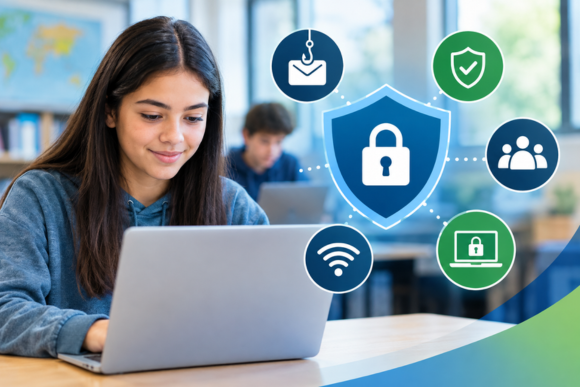
Do you know who’s governing your student data?
Consider this scenario: Your district has done its homework. An educational app has been reviewed, its privacy policy checked, its security requirements evaluated, and its use approved.
Great. But what happens next?
Does that approval mean the app should have ongoing access to the same student information? What happens when the vendor adds new features, the app requests additional data, or students and staff change roles?
Approving an app is only the beginning of protecting student data.
For K-12 districts managing hundreds of connected applications, student data privacy can’t stop at the approval process. Every connection creates an ongoing responsibility to ensure that information is shared appropriately, access remains justified, and sensitive data isn’t exposed unnecessarily.
That’s why schools need more than an app approval process. They need an ecosystem governance platform that puts them in control of how student information moves across their digital environment.
An Approved App Isn’t Necessarily a Secure App Forever
Think about how much changes during a single school year.
Students transfer between schools. Teachers change assignments. New applications are introduced. Existing vendors add features, including AI capabilities that may process information differently than the original application.
Yet in many districts, the permissions established when an application was first connected remain in place long after those circumstances change.
An app that needed access to student names, class rosters, and grade levels in August may not need the same information in January. A vendor introducing an AI feature may create new questions about how student information is used or shared.
The problem isn’t necessarily that the application is unsafe. It’s that the district may no longer have a clear picture of what information is being shared, why it’s being shared, or whether that access is still appropriate. And when student data is involved, that’s a risk schools can’t afford to ignore.
Your District Needs to Govern Data, Not Just Approve Apps
Most districts have some process for evaluating educational technology before adoption. But approval processes, vendor agreements, and application inventories only tell part of the story. They don’t necessarily tell administrators what’s happening to student data after an integration goes live. Consider a few important questions:
- Can you see which applications are accessing student information across your district?
- Do those applications receive only the data they actually need?
- Can you control what information is exchanged without disrupting the tools teachers rely on?
- What happens when a vendor changes its data requirements?
- Can you identify unnecessary exposure before it becomes a security or compliance problem?
If answering those questions requires contacting multiple vendors, digging through integration settings, or manually comparing data-sharing agreements, your district may have an app management process without comprehensive ecosystem governance.
There’s a significant difference between knowing which apps are approved and controlling how those apps interact with student data. SchoolDay’s Ecosystem Governance Platform is designed to address that difference. Rather than treating every application as a separate relationship to manage, SchoolDay helps districts bring their connected technologies into a governed ecosystem with centralized visibility, privacy controls, and secure data exchange.
Stop Sharing More Student Data Than Necessary
Here’s a question every district should ask: Why does an edtech app need direct access to a student’s identity if it can perform its intended function without it?
Too often, traditional integrations rely on sharing identifiable student information because that’s how the connection was originally designed, but just because data is available doesn’t mean it should be shared. An application that supports classroom assignments may need to recognize individual students and their course enrollments. That doesn’t automatically mean it needs unrestricted access to personally identifiable information (PII) or unrelated student records.
SchoolDay takes a different approach through tokenization and data minimization.
Tokenization allows supported applications and data exchanges to use tokens in place of direct student identifiers, reducing unnecessary exposure while preserving the functionality schools need. Combined with policy-driven data exchange, this approach helps districts make more deliberate decisions about what information applications receive.
The goal isn’t to make educational technology harder to use. It’s to make student data protection part of how the technology works.
And the less sensitive information districts unnecessarily distribute across their ecosystem, the less information there is to expose if an individual vendor experiences a security incident.
Zero Trust Doesn’t End When an Application Is Approved
One of the biggest misconceptions about application security is that trust is something a vendor earns once. A vendor passes a review, signs an agreement, and receives approval. From that point forward, its access may be treated as an established part of the district’s technology environment. But that’s not how zero-trust security works.
Zero trust means approval doesn’t automatically justify unlimited or permanent access.
Access should be based on legitimate need, appropriate authorization, and the information required for a specific function. For schools, that means moving beyond a one-time decision about whether an application can connect to district systems. It means establishing governance that can support ongoing decisions about what data an application should receive, how that information is exchanged, and when access requirements need to be reconsidered.
SchoolDay brings zero-trust principles into the K-12 application ecosystem through privacy governance, tokenization, and controlled data exchange.
Instead of relying exclusively on individual vendors to manage student information appropriately, districts can take a more active role in governing the data flowing between their systems.
Student Data Governance Is a Leadership Responsibility
IT teams are often expected to manage application integrations, but protecting student information shouldn’t fall entirely on their shoulders. District leaders make decisions about educational priorities. Curriculum teams select instructional resources. Privacy and compliance personnel evaluate legal obligations. Technology teams manage the infrastructure that makes everything work.
All of those decisions affect student data.
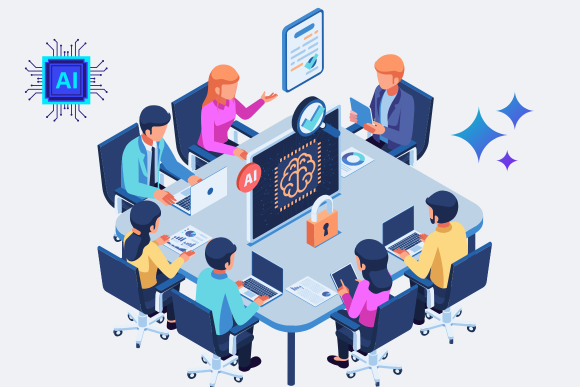
Without a coordinated governance approach, it’s easy for responsibility to become fragmented. One department approves a tool, another manages its integration, and someone else handles questions about privacy or compliance. Meanwhile, the application continues exchanging information.
An ecosystem governance platform helps bring those responsibilities together by providing a more consistent framework for managing applications and their data relationships. That matters especially for districts with limited IT resources. Schools shouldn’t need a large technology department to maintain meaningful oversight of their digital ecosystem. With better visibility and centralized controls, administrators can spend less time chasing information across disconnected systems and more time making informed decisions about student privacy.
What Should Districts Be Reviewing Right Now?
You don’t have to wait until the next procurement cycle to strengthen your district’s approach to student data governance.
- Start with the applications already in use.
- Look at which tools have access to student information, whether their data requirements still align with their educational purpose, and whether any integrations have changed since they were originally approved.
- Pay particular attention to applications introducing AI functionality, vendors requesting additional data, and tools that may no longer be actively used.
- And don’t overlook the bigger picture. Even when individual applications have been approved, the combined effect of hundreds of integrations can create unnecessary data sprawl and make oversight increasingly difficult.
The objective isn’t to create more paperwork or slow down innovation. It’s to make sure that the technology supporting teaching and learning doesn’t introduce avoidable risks to the students it’s meant to serve.
App Approval Is a Starting Point. Governance Is What Comes Next.
Schools have invested heavily in building digital learning environments that give educators and students access to powerful tools. Now they need to make sure those environments remain secure as technology, applications, and data requirements evolve. That takes more than reviewing privacy policies and maintaining an approved app list. It takes visibility into the ecosystem, control over data exchange, and a zero-trust approach that limits unnecessary exposure of student information.
SchoolDay helps districts move from managing individual applications to governing their entire digital ecosystem.
Because protecting student data shouldn’t depend on what happened when an app was first approved. It should be built into every connection that comes afterward.
Ready to take greater control of your district’s digital ecosystem? Explore how SchoolDay’s Ecosystem Governance Platform helps schools protect student information while keeping educational technology connected and accessible.