Executive Summary
Boston Public Schools (BPS) is on a multi-year journey to centralize and govern its district-wide data ecosystem using the SchoolDay platform. Historically, the district relied on CSV files to move data between systems, requiring staff to manually script, merge, and validate information. This approach was time-consuming, error-prone, and exposed sensitive student and staff information across multiple locations. With SchoolDay, BPS is moving toward a model where data is ingested once from core systems, merged, transformed, and securely delivered to downstream vendors and applications, eliminating many of the inefficiencies and risks associated with fragmented workflows. By centralizing data movement, applying consistent business rules, and enabling monitoring and auditability, the district is creating a foundation for long-term scalability, governance, and security.
The Challenge: Fragmented Data and Limited Oversight
Before implementing SchoolDay, Boston Public Schools managed data across multiple systems, including Aspen SIS for student information, PeopleSoft HR for staff records, Ed-Fi ODS for state reporting, Clever for Classroom Applications, and a variety of third-party and charter school applications. Each integration operated largely in isolation, requiring manual effort to consolidate data for reporting or delivery to vendors. Errors were often discovered by end users rather than the IT team, and sensitive information was duplicated across multiple servers, increasing security risk. There was no single source of truth, and the district lacked centralized oversight or a way to enforce governance policies across all integrations.
Recognizing these challenges, BPS began a strategic journey to consolidate data flows, improve visibility, and introduce proactive monitoring and governance. The goal was not just operational efficiency but also to create a platform capable of enforcing privacy and security policies at scale while supporting the district’s growing technology ecosystem.
The Journey Begins: Moving Toward Centralization
The initial phase focused on the ParentSquare integration, which requires comprehensive student, teacher, parent, and staff data. This integration also merges state-level data from the Ed-Fi ODS to ensure accuracy and compliance. Using SchoolDay, BPS has moved away from manually managed CSVs, applying APIs and secure alternatives to consolidate, transform, and deliver data in the format required by downstream vendors.
This integration is a proof-of-concept for the district’s broader strategy. BPS is actively working on 16 additional integrations, moving toward a fully centralized platform where all data flows are auditable, secure, and controlled. Each integration represents a step in a broader learning process, allowing the district to refine policies, strengthen governance, and improve operational efficiency incrementally.
“With SchoolDay, we will finally have visibility into all the data moving across the district,” said Miguel Duran, Director of Applications and Systems Integration. “We can discover shadow IT using their privacy governance console, track where data is, and ensure it’s flowing correctly—without relying on spreadsheets or ad hoc scripts.”
Workflow Example: ParentSquare Integration
To illustrate the impact, consider the ParentSquare integration. Previously, student enrollment, grades, class, and roster data were exported from Aspen SIS, merged with state-level Ed-Fi data, manually transformed, and delivered as CSV files. Staff needed to validate and reformat these files frequently to meet vendor requirements.
With SchoolDay, the workflow has changed dramatically. Data is ingested once from each source system. Business rules are applied automatically to merge and transform the information, and the platform delivers a clean, vendor-ready dataset. SchoolDay provides visibility into the integration’s health, and alerts notify IT of any potential issues before they affect end users. Audit logs track every data movement, ensuring that all access and transformations are documented. This workflow not only reduces errors and staff workload but also provides a foundation for secure, auditable governance.
Building Capabilities: Flexibility, Operationalization, and Governance
SchoolDay allows BPS to operationalize data in ways that were previously impossible. Custom business rules can be applied directly through the platform, enabling dynamic transformation, merging, and validation. SchoolDay provides at-a-glance insight into integration health, and alerts that empower the IT team to proactively address issues before end users are impacted. Audit logs capture all data movements, merges, and access events, providing transparency and supporting compliance with privacy and security policies.
“The platform’s flexibility to merge, transform, and operationalize data in one place has completely changed how BPS manages integrations,” said Juha Engman, SchoolDay’s VP of Engineering. “It’s no longer siloed chaos—it’s centralized, auditable, and secure.”
Operationally, these capabilities reduce staff workload, minimize errors, and improve the speed and accuracy of data delivered to downstream vendors. By centralizing integrations and enforcing consistent business rules, BPS is improving both efficiency and governance, while laying the groundwork for future integrations and expansion.
Enhancing Privacy and Security: A Strategic Focus
Privacy and security are central to BPS’s journey. With multiple downstream vendors handling sensitive student and staff information, it is essential to have visibility into where data exists, who has access, and how it flows. SchoolDay enables the discovery of shadow data and unknown integrations, allowing the IT team to identify risks and enforce consistent policies.
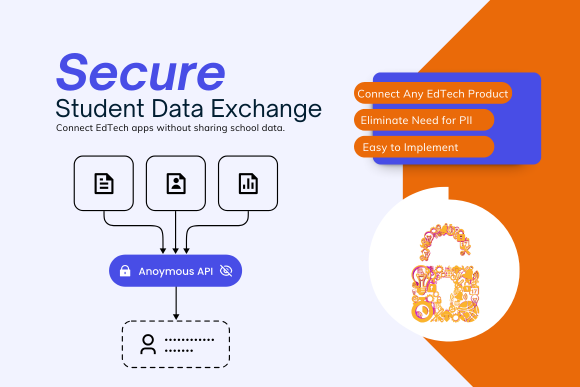
Looking forward, BPS is preparing to implement tokenization through SchoolDay’s Self-Sovereign Data Vault. This will allow the district to securely share data with vendors without exposing raw PII and enforce Zero Trust principles across all integrations. These initiatives ensure that privacy and security are built into the system’s architecture rather than added as an afterthought.
“SchoolDay gives us confidence that all sensitive data is accounted for and managed securely,” said Miguel Duran, Director of Applications and Systems Integration. “We can enforce privacy and security at scale, and the audit logs make it easy to prove compliance.”
Forward-Looking Roadmap
BPS views its SchoolDay implementation as a long-term journey. Immediate priorities include expanding the platform to additional integrations, refining business rules, and strengthening auditing and monitoring capabilities. Future initiatives include implementing tokenization for sensitive PII, enforcing Zero Trust principles across all integrations, and further automating the discovery and control of shadow IT.
“Teachers and staff often adopt new apps to support their students, sometimes without IT even realizing it—creating hidden data flows that put sensitive information at risk,” said Robert Iskander, CEO of SchoolDay. “Our platform helps districts discover these shadow IT systems, giving them the visibility and control needed to secure and govern all data across the school ecosystem.”
The ultimate vision is a fully centralized, auditable, and secure data ecosystem where IT can monitor and control all data flows, enforce privacy policies consistently, and safely support downstream vendors without exposing sensitive information. Each step along the way builds operational efficiency, improves governance, and ensures that the district is prepared to scale as technology needs evolve.
Conclusion
Boston Public Schools’ journey with SchoolDay demonstrates how a large, complex district can move from fragmented, siloed data flows to a centralized, governed, and auditable system. Early successes with ParentSquare and ongoing work with additional integrations highlight the platform’s ability to reduce errors, save staff time, and improve data accuracy. Privacy and security are being strengthened through enhanced visibility, audit logs, and plans for tokenization, ensuring that sensitive information is managed responsibly. Although the journey is ongoing, BPS is steadily building a sustainable, scalable model for data management that will serve the district well into the future.
“Our goal is to ensure that every piece of student and staff data is accurate, secure, and auditable,” said Miguel Duran, Director of Applications and Systems Integration. “With SchoolDay, we’re gaining the visibility and control we need to manage integrations centrally, proactively identify issues, and support our teachers and staff without them having to worry about lost learning time.”